
HANS HABEGER
Geometry of the Familiar
Hans Habeger
Artist Statement
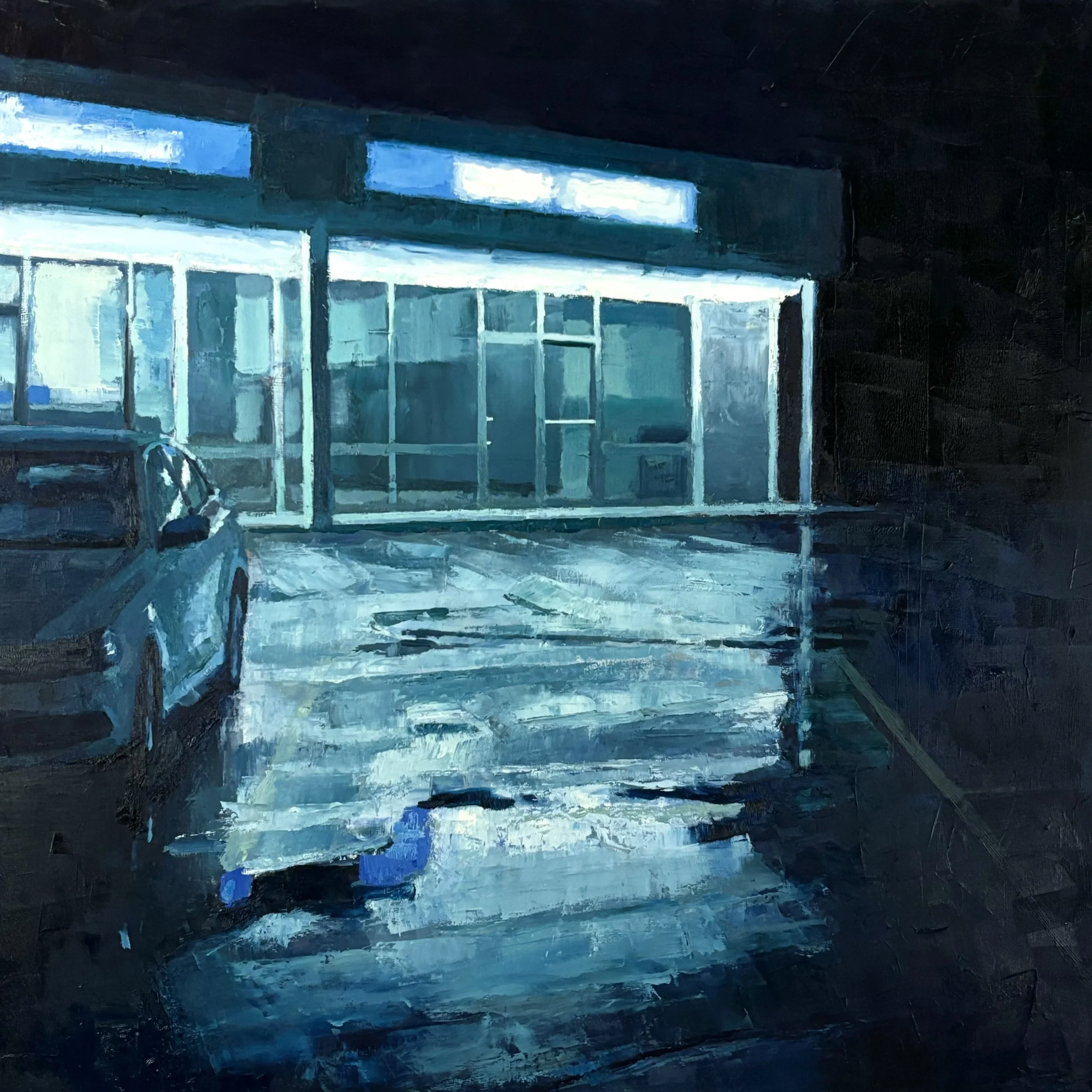
My work concentrates on landscapes centered around commercial architectural settings such as strip malls and big box stores. These types of settings are common in the suburban landscape and highlight the culture of consumerism and convenience in which we live. I find these subjects in my surroundings appealing due to familiarity, evidence of time, qualities of light, implications of metaphor and narrative, and arrangement of the formal design elements.
I paint in oils on wood and aluminum panels and draw with conte crayon, charcoal, and pastel on a variety of surfaces. Photographic references are the source images as they allow me to capture a wide range of subjects, views, and the specificity of the place.
Drawing is important to me. I usually start by creating sketches of subjects. I might then start a larger value drawing or begin a painting of the composition. The process of drawing is fast and direct, allowing me to quickly discover the shapes, proportions, values, and placement of the forms, while also experimenting with mark marking and texture. With both, drawing and painting, the works are created with the goal of capturing the overall qualities of the scene that intrigued me from the start while also using discoveries made during the process.
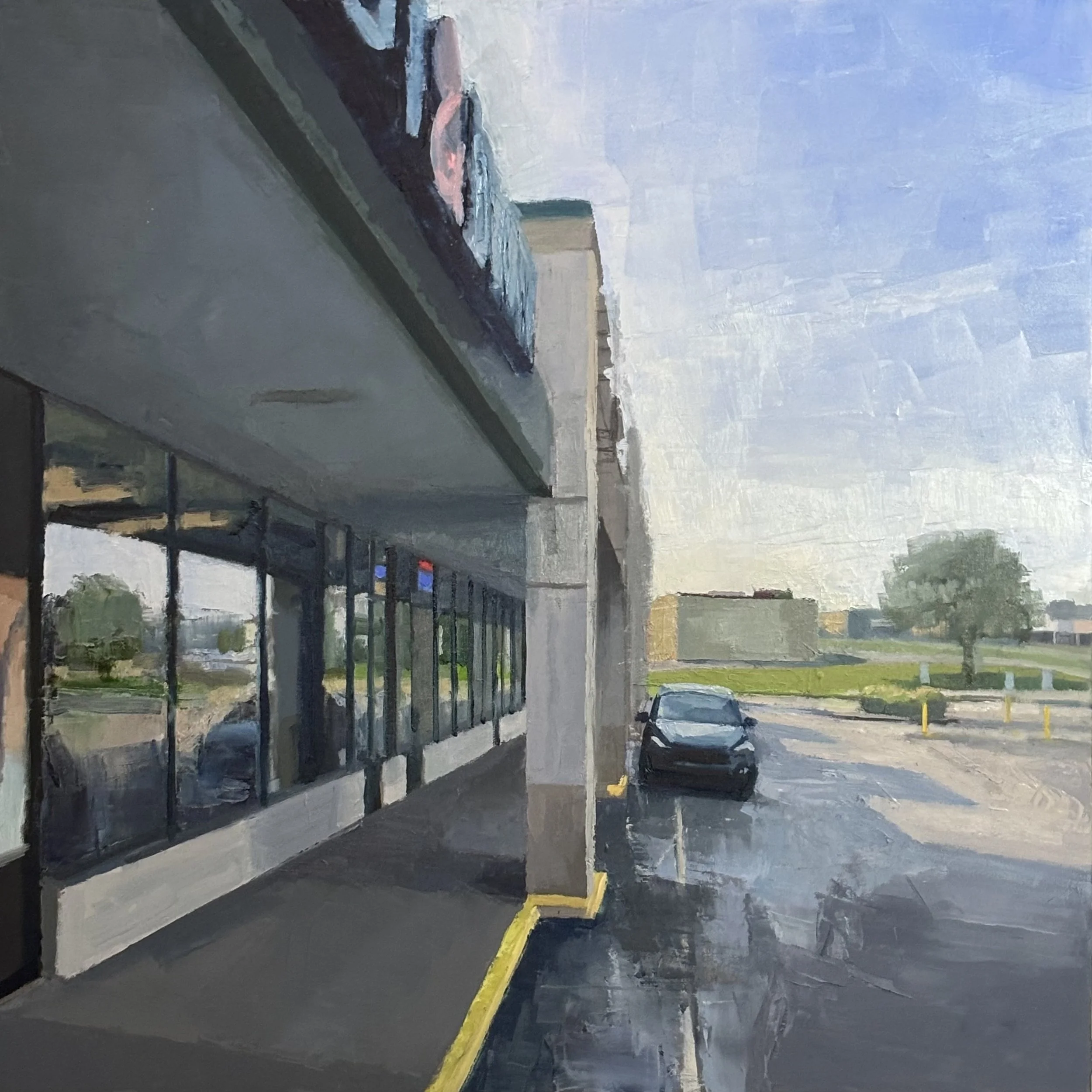
Looking Back, Hans Habeger
Blue Night, Hans Habeger
Recently, I have been able to return to painting landscapes outside, en plein air, during the summer. I've enjoyed reconnecting with the experience of working from life which I find to be deeply personal, engaging, and challenging. Painting plein air has influenced my studio practice by adding directness and vitality to my painting process. It has also helped me limit my palette and be faster with color mixing. Working on location forces me to work quickly, generalize, and to stay flexible while chasing the changing qualities of the such as light and color.
DAVID LINNEWEH
Geometry of the Familiar
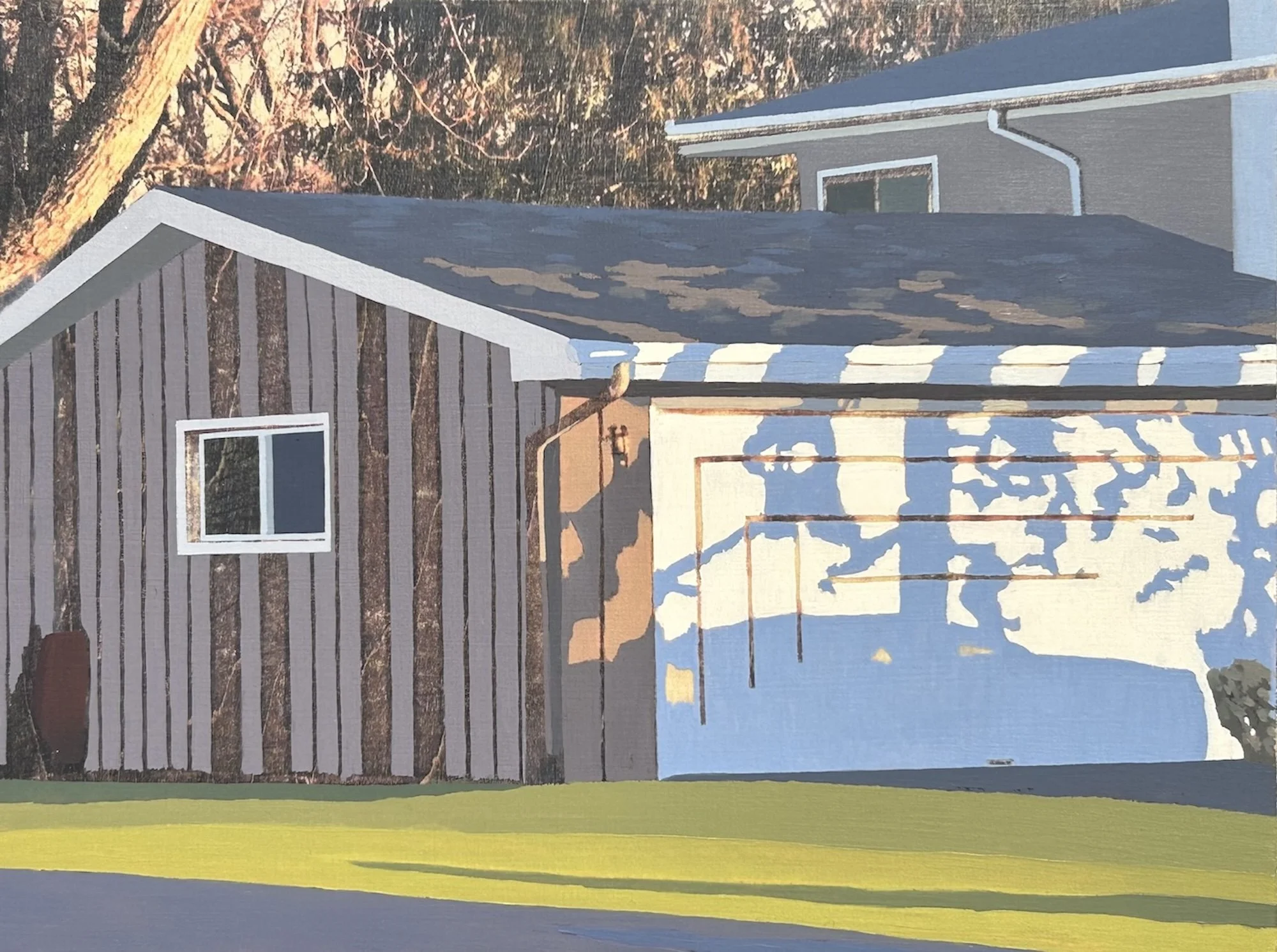
Pembroke 32, David Lenneweh
David Linneweh
Artist Statement
When walking through my neighborhood my mind is flooded with observations of light as it falls over homes and manicured lawns. Facades glisten with an intensity and variety of color that illicit a dreamlike state that feels nostalgic and prophetic in the same time. These suburban streets transport me in time; I close my eyes and memories of backyard barbeques, bike rides, and birthday parties in the garage fill my head. As the setting sun bathes rooftops in a warm glow I reflect on the idea of the American Dream and wonder if its tenets are based in illusion or reality.
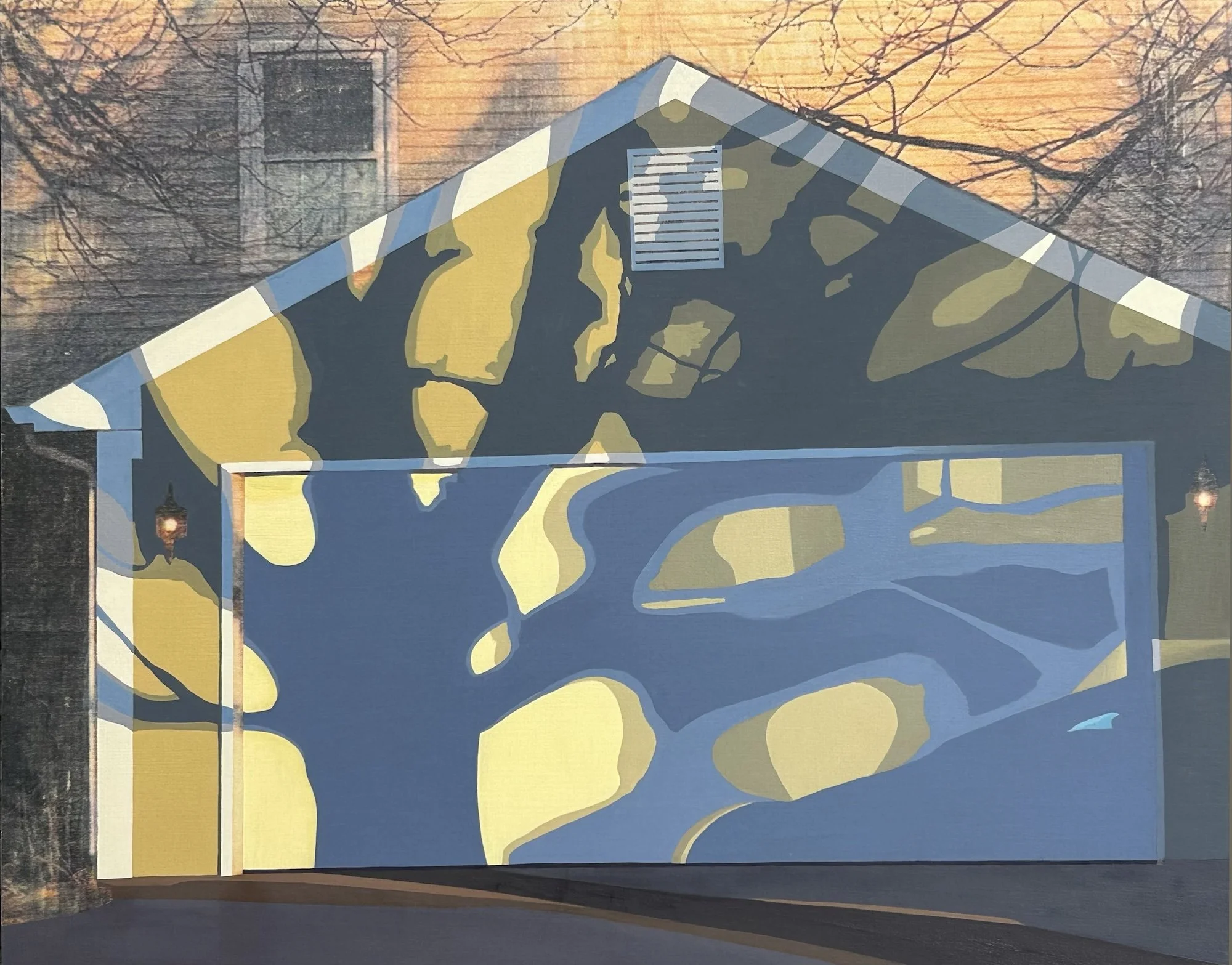
Pembroke 43, David Lenneweh
My experiences in the landscape are distilled through photography, which begins my process; photos with dynamic formal qualities are then selected as the foundation of a new painting. Digital images are then carefully composed and printed to create image transfers over a wood veneer, resulting in an image that appears old and weathered. A layer of graphite is then applied to give definition to the edges of architectural and greenery elements, when the drawing is complete, the surface is then sealed with layers of matt medium. The painting process begins by adding shapes of flat color followed by careful reflection of the paint’s interaction with the implied texture and faded color of the image transfer. The paintings slowly evolve over numerous sessions to create a composition that at a distance looks whole but upon close inspection are defined by flat shapes of color that sit on the surface.
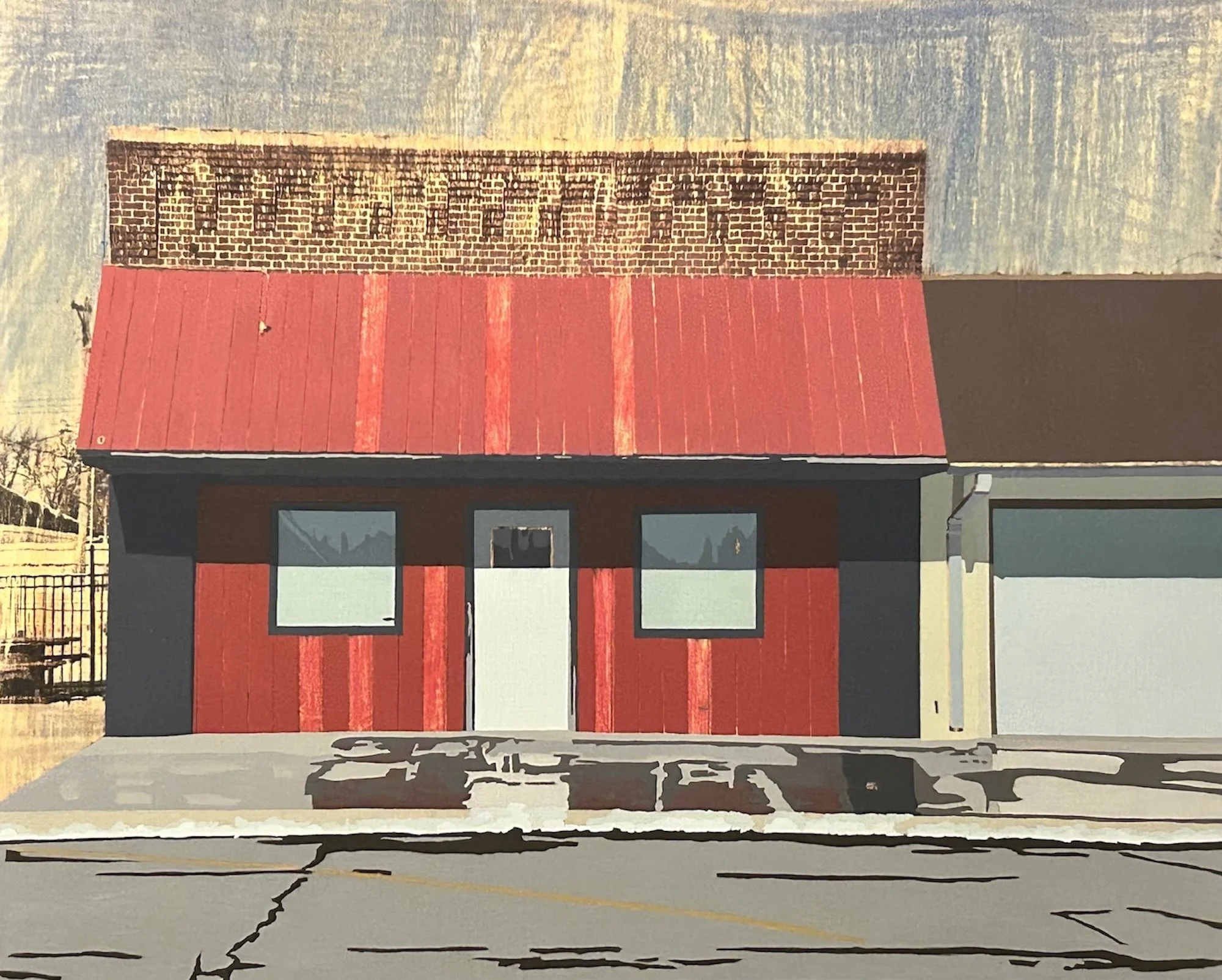
Pembroke 36, David Linneweh
The finished paintings are formally inviting yet unresolved because they acknowledge their own physicality as paint and object. The visual tension in my paintings reflect the current tension within Contemporary America where families endeavor to transform dreams into reality. In this way, the paintings act as mirrors meant to evoke the viewer to meditate and reflect on the idea of the American Dream. Do these works elicit faded memories of the past or do they bolster the ideals of a utopian society. One wonders if this dream has become manifest or if it represents an unattainable ideal that mutates through the passage of time.
LADAN GHAJAR
Ladan Ghajar
Artist Statement
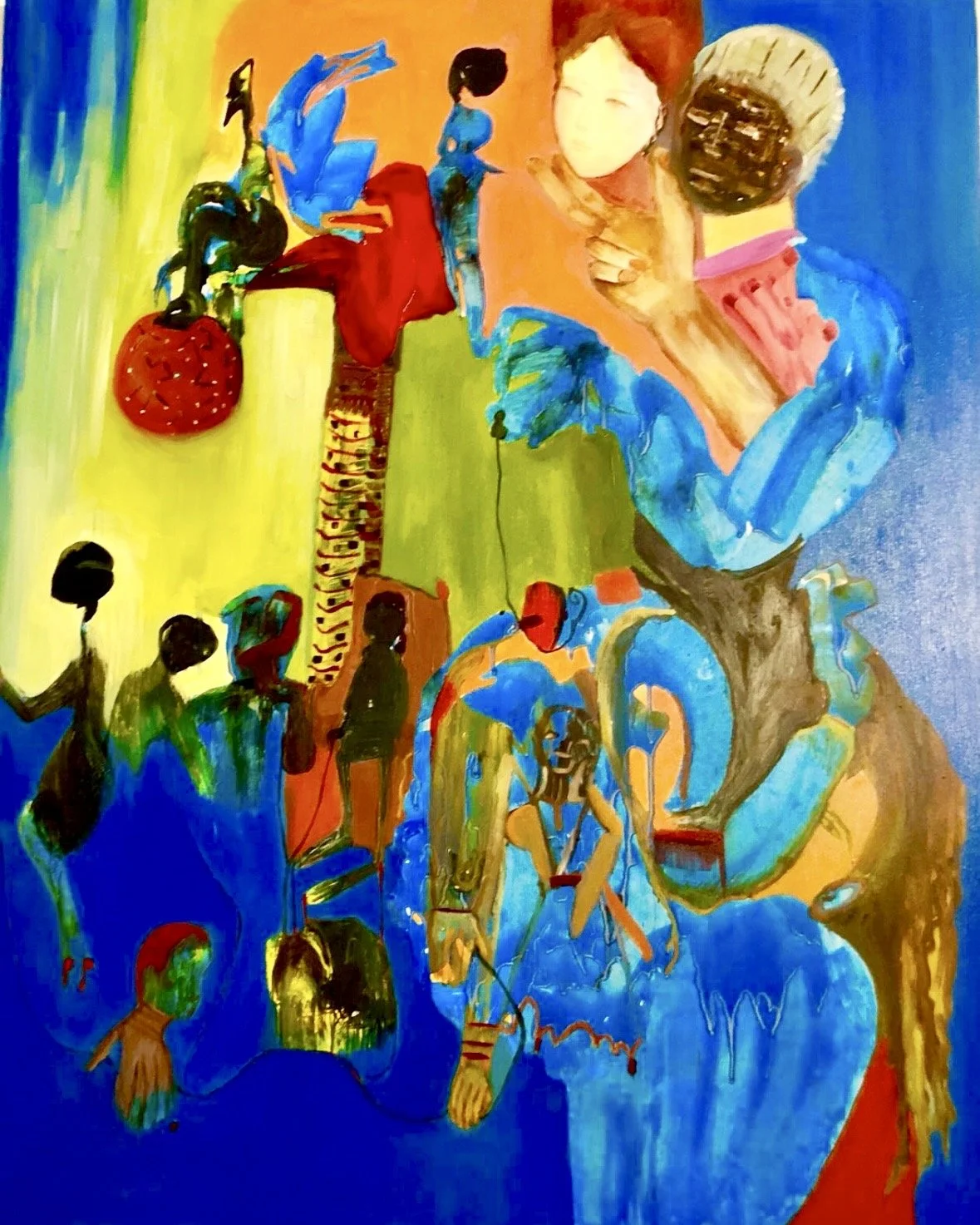
Ladan is a graduate of The Art Institute of Chicago and a recipient of the Merit Scholarship. She is a kind of a seeker standing between two worlds, employing oils, acrylics, and bold textures not to entice the eye, but to awaken consciousness. For her, the brushstroke is a tool of truth, and contrast is the language of a soul caught between light and shadow.
Her identity is a bridge between the silent majesty of Ancient Persia and the philosophical challenges of the modern world. She hails from a land of ancient wisdom; yet today, her identity bears the scars of a motherland in chains, yearning to reclaim that eternal Iran which survives far beyond transient clamors. art for her is an 'internal medium'—a tool to paint thoughts and manifest the unseen. Every brushstroke is an extension of the words that flow through her poetry, writings, and literature of her visions and dreams.
In her work, art serves as an intuitive bridge. Through the deliberate layering of pigments, she narrates the unwritten chapters of her poetry—traveling from the "Cave of the Past" through "Collective Dreams" to the "Manifestations of the Future." Her path is a mirror for a soul searching for a vaster home amidst the glory of its ancestors and the ambiguity of tomorrow.
-
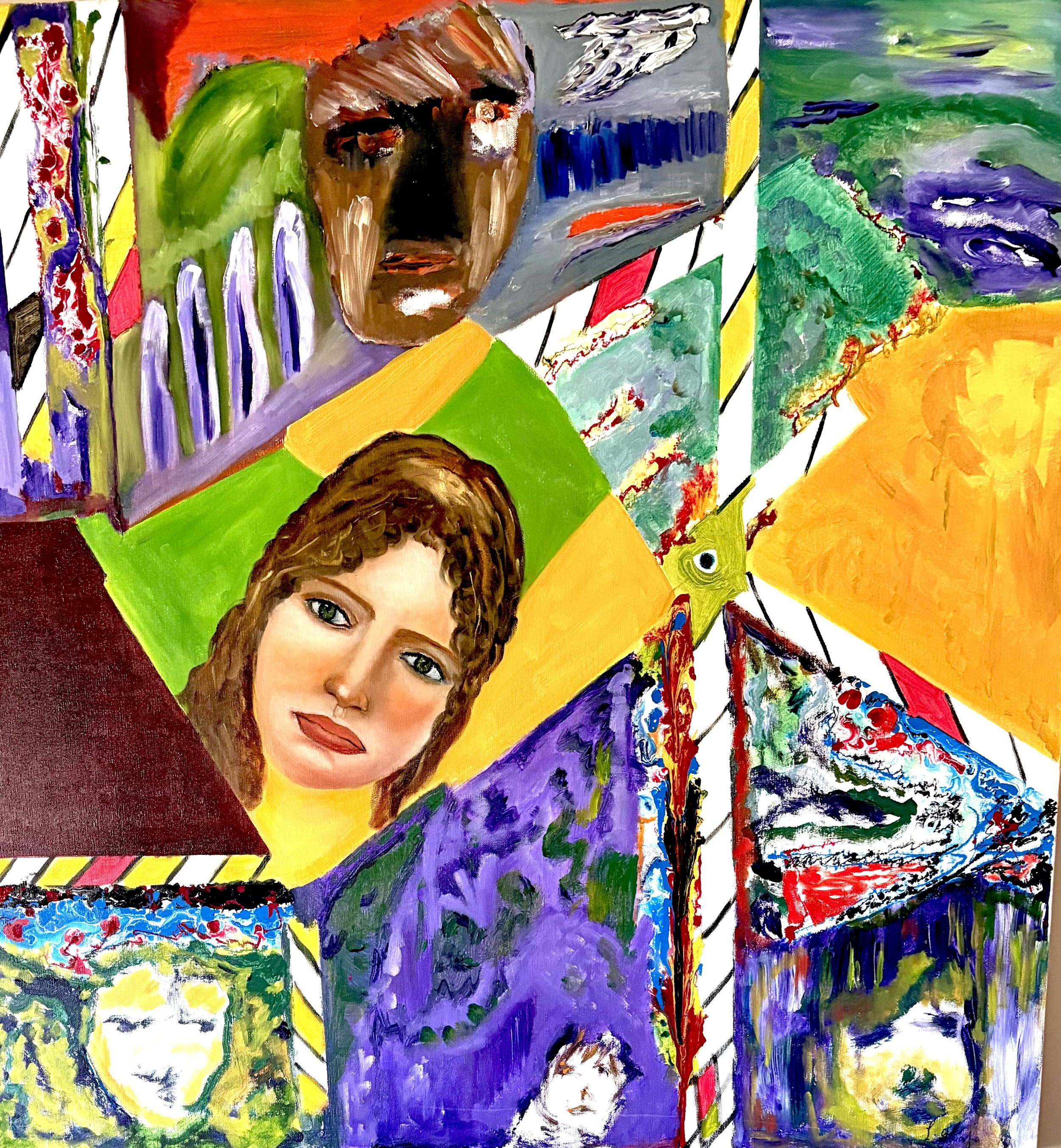
"In this piece, the artist transports us back to the first sanctuary of consciousness, where textured layers and raw fibers evoke the ancient cave walls that narrated the human story long before words existed. At the heart of this primal environment stands a meticulously rendered figure, creating a sharp contrast with its gritty surroundings—a presence suspended between an 'unanswered question' and an 'eternal sorrow.' This painting embodies the modern conscious soul searching for the roots of that ancient grief amidst the noise of technology; a fragment of primordial peace reclaimed for the modern world, serving as a silent anchor to our essence."
-
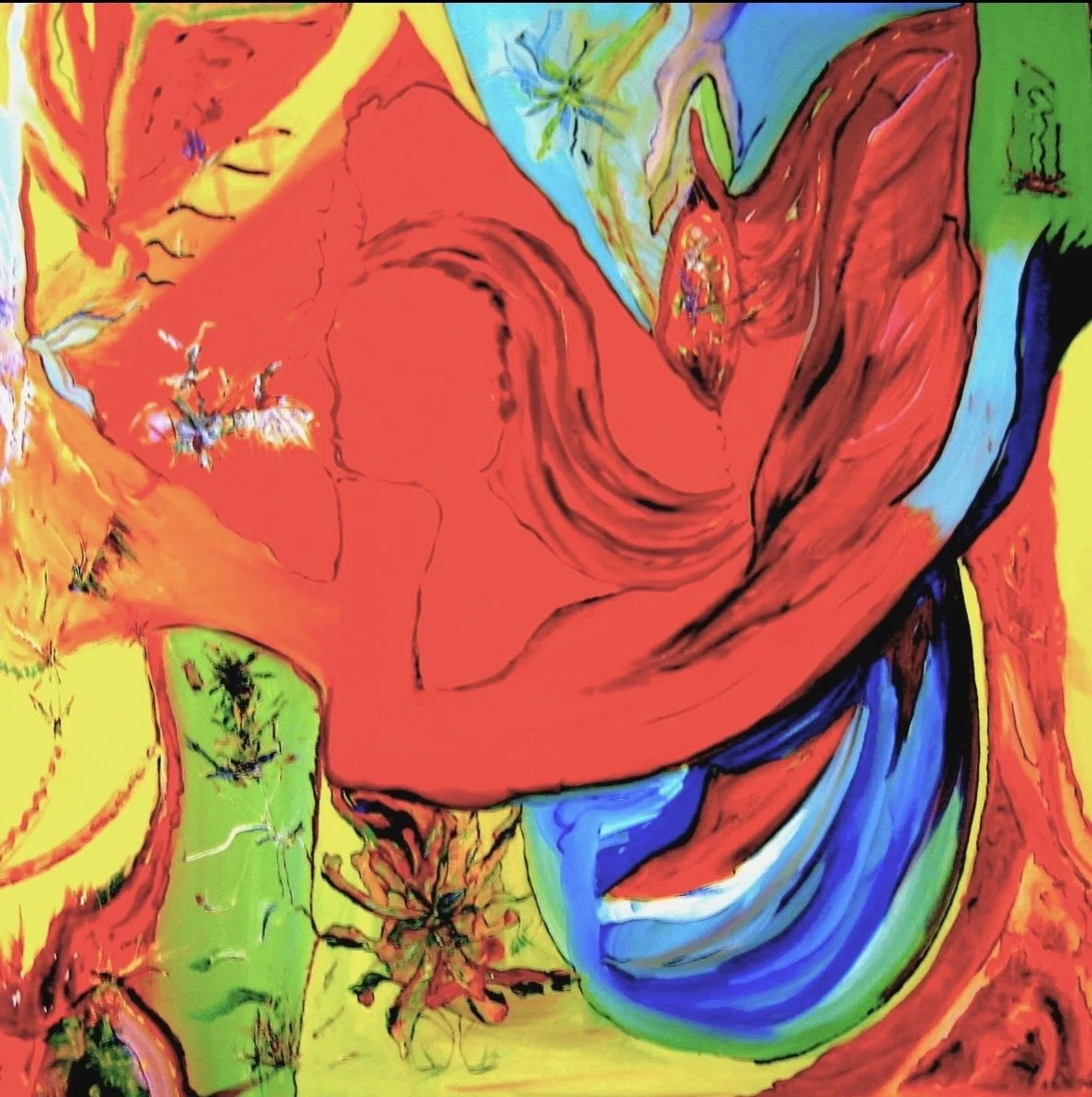
At this threshold, matter recedes in reverence to imagination. The artist invites us into a sanctuary of fluid blues and greens—the very place where, as Carl Jung envisioned, individual boundaries dissolve into the vast ocean of the 'Collective Unconscious.' This painting is the awakening of the soul in the heart of the night; an ethereal current where the questioning figure from the cave sheds its skin, seeking its 'lost soul' amidst the dance of ancient archetypes. It is a call to touch the intangible—a shimmering bridge of color and light connecting the cold earth of the past to the fearless horizons of tomorrow, urging the observer to meet their higher self within the mirror of this dream."
-
At this final station, words begin to falter. This presence standing in the dust is not the light we sought at the end of our dreams; it is a cold reality born from the ashes of our negligence, rising to replace 'humanity.' By presenting this trilogy, the artist leads us from the dark roots of the cave and the fluid ocean of dreams to this definitive moment: where, in the shadow of this commanding presence, we glimpse a hidden, terrified figure, crouching behind the footsteps of its ancestors in sheer horror of its end. This exhibition is a journey from 'being' to 'falling'; a connection across three temporal slices to remind us that if human consciousness fails to awaken amidst today’s chaos, this pulse-less horizon will be the only home left for our dreams. Although Yet, a pulse of light still beats within this silence; as long as 'love' endures, the sun of consciousness will find its way home through any shadows who search for the beginning of a fateful choice."